Facebook Twitter Instagram
    Trending
    • Urban-Rural Polarization in Canada
    • Confronting the Anti-Futures Triangle
    • Symposium: War, Genocide, and Futures Beyond US Hegemony
    • Foreword: Editorial Statement On the Necessity of Critique
    • Does Genocide Have Gender?
    • Welcoming Collapse to Create Better Futures
    • From Collapse to Motherships
    • The Futures of the United Nations
    Journal of Futures Studies
    • Who we are
      • Editorial Board
      • Editors
      • Core Team
      • Digital Editing Team
      • Consulting Editors
      • Indexing, Rank and Impact Factor
      • Statement of Open Access
    • Articles and Essays
      • In Press
      • 2025
        • Vol. 30 No. 2 December 2025
        • Vol. 30 No. 1 September 2025
        • Vol. 29 No. 4 June 2025
        • Vol. 29 No. 3 March 2025
      • 2024
        • Vol. 29 No. 2 December 2024
        • Vol. 29 No. 1 September 2024
        • Vol. 28 No. 4 June 2024
        • Vol. 28 No. 3 March 2024
      • 2023
        • Vol. 28 No. 2 December 2023
        • Vol. 28 No. 1 September 2023
        • Vol. 27 No. 4 June 2023
        • Vol. 27 No. 3 March 2023
      • 2022
        • Vol. 27 No. 2 December 2022
        • Vol. 27 No.1 September 2022
        • Vol.26 No.4 June 2022
        • Vol.26 No.3 March 2022
      • 2021
        • Vol.26 No.2 December 2021
        • Vol.26 No.1 September 2021
        • Vol.25 No.4 June 2021
        • Vol.25 No.3 March 2021
      • 2020
        • Vol.25 No.2 December 2020
        • Vol.25 No.1 September 2020
        • Vol.24 No.4 June 2020
        • Vol.24 No.3 March 2020
      • 2019
        • Vol.24 No.2 December 2019
        • Vol.24 No.1 September 2019
        • Vol.23 No.4 June 2019
        • Vol.23 No.3 March 2019
      • 2018
        • Vol.23 No.2 Dec. 2018
        • Vol.23 No.1 Sept. 2018
        • Vol.22 No.4 June 2018
        • Vol.22 No.3 March 2018
      • 2017
        • Vol.22 No.2 December 2017
        • Vol.22 No.1 September 2017
        • Vol.21 No.4 June 2017
        • Vol.21 No.3 Mar 2017
      • 2016
        • Vol.21 No.2 Dec 2016
        • Vol.21 No.1 Sep 2016
        • Vol.20 No.4 June.2016
        • Vol.20 No.3 March.2016
      • 2015
        • Vol.20 No.2 Dec.2015
        • Vol.20 No.1 Sept.2015
        • Vol.19 No.4 June.2015
        • Vol.19 No.3 Mar.2015
      • 2014
        • Vol. 19 No. 2 Dec. 2014
        • Vol. 19 No. 1 Sept. 2014
        • Vol. 18 No. 4 Jun. 2014
        • Vol. 18 No. 3 Mar. 2014
      • 2013
        • Vol. 18 No. 2 Dec. 2013
        • Vol. 18 No. 1 Sept. 2013
        • Vol. 17 No. 4 Jun. 2013
        • Vol. 17 No. 3 Mar. 2013
      • 2012
        • Vol. 17 No. 2 Dec. 2012
        • Vol. 17 No. 1 Sept. 2012
        • Vol. 16 No. 4 Jun. 2012
        • Vol. 16 No. 3 Mar. 2012
      • 2011
        • Vol. 16 No. 2 Dec. 2011
        • Vol. 16 No. 1 Sept. 2011
        • Vol. 15 No. 4 Jun. 2011
        • Vol. 15 No. 3 Mar. 2011
      • 2010
        • Vol. 15 No. 2 Dec. 2010
        • Vol. 15 No. 1 Sept. 2010
        • Vol. 14 No. 4 Jun. 2010
        • Vol. 14 No. 3 Mar. 2010
      • 2009
        • Vol. 14 No. 2 Nov. 2009
        • Vol. 14 No. 1 Aug. 2009
        • Vol. 13 No. 4 May. 2009
        • Vol. 13 No. 3 Feb. 2009
      • 2008
        • Vol. 13 No. 2 Nov. 2008
        • Vol. 13 No. 1 Aug. 2008
        • Vol. 12 No. 4 May. 2008
        • Vol. 12 No. 3 Feb. 2008
      • 2007
        • Vol. 12 No. 2 Nov. 2007
        • Vol. 12 No. 1 Aug. 2007
        • Vol. 11 No. 4 May. 2007
        • Vol. 11 No. 3 Feb. 2007
      • 2006
        • Vol. 11 No. 2 Nov. 2006
        • Vol. 11 No. 1 Aug. 2006
        • Vol. 10 No. 4 May. 2006
        • Vol. 10 No. 3 Feb. 2006
      • 2005
        • Vol. 10 No. 2 Nov. 2005
        • Vol. 10 No. 1 Aug. 2005
        • Vol. 9 No. 4 May. 2005
        • Vol. 9 No. 3 Feb. 2005
      • 2004
        • Vol. 9 No. 2 Nov. 2004
        • Vol. 9 No. 1 Aug. 2004
        • Vol. 8 No. 4 May. 2004
        • Vol. 8 No. 3 Feb. 2004
      • 2003
        • Vol. 8 No. 2 Nov. 2003
        • Vol. 8 No. 1 Aug. 2003
        • Vol. 7 No. 4 May. 2003
        • Vol. 7 No. 3 Feb. 2003
      • 2002
        • Vol. 7 No.2 Dec. 2002
        • Vol. 7 No.1 Aug. 2002
        • Vol. 6 No.4 May. 2002
        • Vol. 6 No.3 Feb. 2002
      • 2001
        • Vol.6 No.2 Nov. 2001
        • Vol.6 No.1 Aug. 2001
        • Vol.5 No.4 May. 2001
        • Vol.5 No.3 Feb. 2001
      • 2000
        • Vol. 5 No. 2 Nov. 2000
        • Vol. 5 No. 1 Aug. 2000
        • Vol. 4 No. 2 May. 2000
      • 1999
        • Vol. 4 No. 1 Nov. 1999
        • Vol. 3 No. 2 May
      • 1998
        • Vol. 3 No. 1 November 1998
        • Vol. 2 No. 2 May. 1998
      • 1997
        • Vol. 2 No. 1 November 1997
        • Vol. 1 No. 2 May. 1997
      • 1996
        • Vol. 1 No. 1 November 1996
    • Information
      • Submission Guidelines
      • Publication Process
      • Duties of Authors
      • Notice of Publication Fee Implementation
      • Submit a Work
      • JFS Premium Service
      • Electronic Newsletter
      • Contact us
    • Topics
    • Authors
    • Perspectives
      • About Perspectives
      • Podcast
      • Multi-lingual
      • Exhibits
        • When is Wakanda
      • Special Issues and Symposia
        • The Hesitant Feminist’s Guide to the Future: A Symposium
        • The Internet, Epistemological Crisis And The Realities Of The Future
        • Gaming the Futures Symposium 2016
        • Virtual Symposium on Reimagining Politics After the Election of Trump
        • War, Genocide and Futures Beyond US Hegemony
    • JFS Community of Practice
      • About Us
      • Teaching Resources
        • High School
          • Futures Studies for High School in Taiwan
        • University
          • Adults
    Journal of Futures Studies
    Home»Books»Infectious Futures: Book Launch, Remembering and Meme Competition
    Books

    Infectious Futures: Book Launch, Remembering and Meme Competition

    July 16, 2022Updated:July 18, 20227 Mins Read
    Facebook Twitter Pinterest LinkedIn Tumblr Email

    Book Launch

    Infectious Futures: Reflections, Visions, and Worlds through and beyond COVID-19, is an anthology of 28 essays written during the first 18 months of the COVID-19 pandemic, published by Tamkang University through JFS digital. It explores the symptoms, causes and futures of COVID-19 and offers a wide range of perspectives that provide pathways out of the pandemic, as well as strategies to deal with epidemics and pandemics into our futures. (see Table of Contents below).

    The launch will feature an introduction to the book content, and a conversation between editors and participating authors discussing the kind of thinking required to anticipate, prevent, prepare and respond to the pandemics of the 21st century. All attendees will also get a complimentary PDF copy of the book.

    As part of the launch the Journal of Futures Studies is running a meme competition that invites the public to contribute a meme that responds to our call to action:

    Register for Event 

    How do we make futures thinking / analysis / studies infectious? So that we are better prepared for future epidemics and pandemics?

    Remembering Hazel Henderson

    As part of the launch we will take a few minutes to remember Hazel Henderson, one the book authors who recently passed away. A brilliant futurist, innovator and scholar / writer, she left a remarkable legacy of thinking and action – a planetary citizen par excellence.

    Meme Competition

    To infect and to be infected – this is a reality of our biological existence. We have co-existed with viruses during our evolutionary history.

    As a consequence, humanity has lived with, suffered from and overtime learned to overcome and control viral outbreaks. It was only through science that the dynamics of viral pathogens were finally understood, and effective responses could be crafted.

    COVID-19 was no exception, as the virus jumped probably from one species to another, then to humans, with devastating effect, hitching rides across our globalized transport systems to spread across the world and become a fully fledged pandemic.

    But the COVID-19 pandemic also saw something different. While viruses can be seen as small portions of nucleic acid that only are able to replicate within a living cell, we also live in the era of the “meme”, the smallest combination of information – ideas and images able to replicate. Just like biological viruses, memes can also “go viral” as ideas spread exponentially.

    Thus, alongside the biological virus was the unprecedented spread of ideas related to the virus, some based on science, others on conspiracies, misinformation or fake news. One could argue this new informational sphere is as fundamental to existence and wellbeing as the biological – as it is only through the spread of truthful, factual and scientific knowledge that we are able to combat COVID-19, let alone our other challenges.

    The pandemic has thus spawned a variety of conspiracies and misinformation, which have spread to a variety of hosts. Some of these memes have a very high R number, they are highly contagious. Different memes took hold in particular communities that held worldviews that are ideal conditions for these memes to spread: ultra-nationalists looking for others to blame, alternative health communities distrustful of big pharma, the politically divergent against authoritarianism. The informational public sphere is an infected space, full of pathogenic memes.

    Instead of being infected by conspiracies, misinformation or fake news, we need to infect the public discourse and imagination with rigorous and ethical futures thinking. We named this book “Infectious Futures”, because we share an understanding that for humanity to navigate the next waves of epidemics and pandemics of the 21st century, futures research, analysis and thinking will be a fundamental resource required. Exploring the futures of a COVID-19 world requires integrative thinking, an interweaving of science, politics, geography, biology, culture… So… how do we infect the informational public sphere with futures…foresight…anticipation?

    As part of the launch we invite you to join this meme competition. You are tasked with creating a meme that expresses the call to action:

    • “How do we make futures thinking / analysis / studies infectious? So that we are better prepared for future epidemics and pandemics?”

    Editors and authors at the book launch will vote on the best memes, and the winner will get US$50 dollars and be featured on the JFS website as the winner. Two runner up winners will get a free hard copy of the book and also be featured on the JFS website.

    Competition Rules

    • Any one can create a meme – it is open to any member of the global public
    • Must have at least image and text, but can also be a video-based meme, gif or a number of image frames
    • The meme must be tweeted on twitter with the hashtag #infectiousfutures and must also tag @JFSdigital
    • The meme must be posted between the 16th of July and midnight 24th of July, 2022.
    • The winner will be decided by book authors at the launch event through an online voting process (TBD)
    • The criteria of voting will be memes that 1) best express the call to action and 2) that authors like most
    • Book authors cannot vote for themselves

    Examples

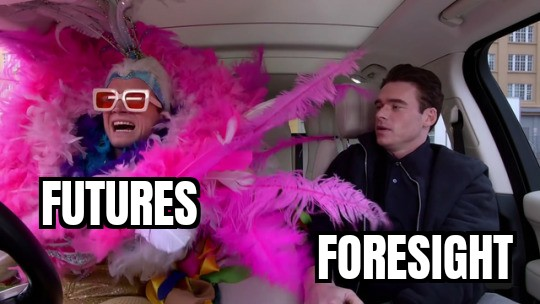
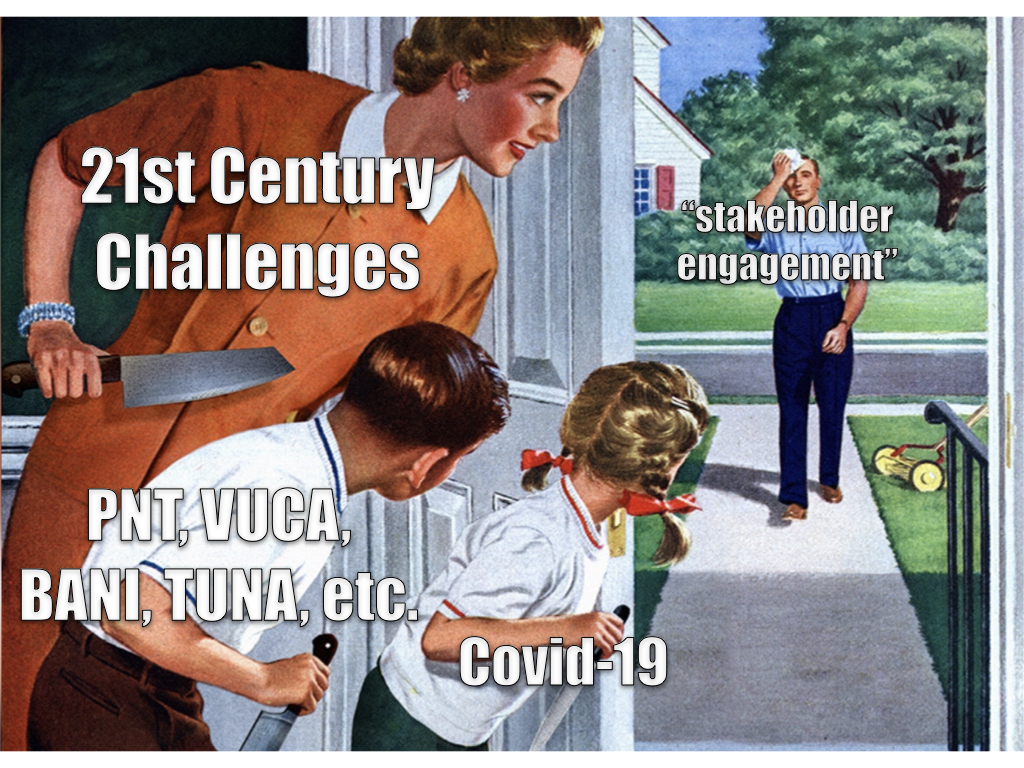
    Here are some example of memes we’ve found which concern thinking about futures. These are just given as examples of memes, they do not necessarily address the specific call to action.



    Book Contents

    Editors: José Ramos, Sohail Inayatullah, Peter Black, John Sweeney

    Chapters:

    • Wildcards Are Our Teachers In A Co-Creative Cosmos, José Ramos
    • Infected By The Future, Sohail Inayatullah
    • Neither A Black Swan Nor A Zombie Apocalypse: The Futures of a World with the COVID-19 Coronavirus, Sohail Inayatullah & Peter Black
    • Let’s Take Bold Action on Health to Avoid Future Pandemics, Susann Roth & Najibullah Habib
    • COVID-19 Both Is And Is Not A Black Swan (And That’s Ok): Futures within and Beyond a Time of Crisis, John A. Sweeney
    • Three Scenarios For The Future Of Education In The Anthropocene, Kathleen Kesson
    • Pandemics: Lessons Looking Back From 2050, Fritjof Capra & Hazel Henderson
    • Collective Intelligence To Solve The Megacrisis, William E. Halal
    • Minimising Conflicts Amidst The COVID-19 Pandemic, Ivana Milojević
    • COVID-19 & Pandemic Preparedness: Foresight Narratives And Public Sector Responses, Ivana Milojević
    • “System Of Life” A Metaphor For Re-Imagining the COVID-19 Pandemic, Rafeeq Bosch
    • Creating A New Renaissance: Can Responses To COVID-19 Pivot Us A To A Transformed World?, Sohail Inayatullah
    • Pandemic-3.0: From Crisis To Transformation: Exploring The COVID-19 Challenge And Opportunity With Synergistic Pathways And Visual Foresight, Joe Ravetz
    • Post-Pandemic Worlds For Society, Government And Economy: Aftermath And Opportunities, Otto C. Frommelt
    • Applying The Futures Wheel And Macrohistory to the COVID-19 Global Pandemic, Phillip Daffara
    • Ancestors Of The Future: The Poetry And Potency Of Language, Marguerite Coetzee
    • What Will A Post Virus World Look Like?, Garry Honey
    • Triple-A Governance: Anticipatory, Agile And Adaptive, Jose Ramos, Ida Uusikyla and Nguyen Tuan Luong
    • Chrysalis: What Emerges from the COVID-19 Pandemic, Jose Ramos
    • How To Keep A Future Perspective In A Crisis, Karen Morley
    • Narrative Foresight And COVID-19: Successes And Failures In Managing The Pandemic, Ivana Milojević & Sohail Inayatullah
    • COVID-19 And The Futures Of Pakistan: Inclusive Foresight And Innovation, Sohail Inayatullah, Puruesh Chaudhary, Syed Sami Raza and Umar Sheraz
    • The Islamic World And COVID-19 Futures, Sohail Inayatullah
    • Looking For Alternatives Under COVID-19 Conditions: Islamic Religious Education in Kazakhstan, Yelena V. Muzykina
    • The Significance Of Futures Scenario Planning In Assuring, Viability Of Higher Education In Disruptive Crises: A Case Study Of Universiti Teknikal Malaysia Melaka In Response to the COVID-19, Fazidah Ithnin
    • Infectious Futures: A Conversation, Jose Ramos, John A. Sweeney, Peter Black, Rafeeq Bosch, Abril Chimal, Otto C. Frommelt, Fazidah Ithnin & Joe Ravetz
    • From Mourning To Dreaming…, John A. Sweeney
    • COVID-19 is Here – ‘It’s Just Not Evenly Distributed’, Peter Black


    Related

    Share. Facebook Twitter Pinterest LinkedIn Tumblr Email
    admin

    Related Posts

    Urban-Rural Polarization in Canada

    February 23, 2026

    Confronting the Anti-Futures Triangle

    February 11, 2026

    Symposium: War, Genocide, and Futures Beyond US Hegemony

    January 29, 2026

    Comments are closed.

    Top Posts & Pages
    • Homepage
    • Towards an Explicit Research Methodology: Adapting Research Onion Model for Futures Studies
    • The Futures Cone Reimagined: A Framework for Critical and Plural Futures Thinking
    • Jose Rizal: Precursor of Futures Thinking in the Philippines
    • Urban-Rural Polarization in Canada
    • Iran at the Crossroads
    • Embodied Presence, COVID-19 and the Transcendence of ITopian Fear
    • Articles by Author
    • Teaching for Transformation: Lessons from Critical Pedagogy for Design Futures Education
    • From Systems to Selves: Applying the Futures Triangle to Personal Futures
    In-Press

    Spawning new futures: new pathways in futures education after COVID-19 — the Metafutureschool story

    February 16, 2026

    Article Barbara Maingon1,2 1Metafutureschool; 2 Uppsala University, Sweden Abstract The COVID-19 crisis shattered the illusion…

    Imagining the Future after Crisis: Science and Environmental Imaginaries in the Anthropocene

    February 16, 2026

    Sawali Weaving as Decolonial Design Futures Practice

    February 3, 2026

    Characters, values, aesthetics: Creative methods for water futures

    February 3, 2026

    Cultural Dimensions in Foresight and Scenario Planning: An Exploratory Study

    February 3, 2026

    Layering Interreligious Harmony: Integrating The Robin Approach and Causal Layered Analysis at the Parliament of the World’s Religions

    February 3, 2026

    The Futures Cone Reimagined: A Framework for Critical and Plural Futures Thinking

    February 3, 2026

    Envisioning the Futures of Language Education in the Era of Artificial Intelligence

    February 3, 2026

    Two Decades of the Futures Triangle (2003–2024): A Critical Review of Theory, Method and Practice

    February 3, 2026

    The River of Dharma: Visions for Transforming River–City Futures

    January 28, 2026

    The Journal of Futures Studies,

    Graduate Institute of Futures Studies

    Tamkang University

    Taipei, Taiwan 251

    Tel: 886 2-2621-5656 ext. 3001

    Fax: 886 2-2629-6440

    ISSN 1027-6084

    Tamkang University
    Graduate Institute of Futures Studies
    © 2026 ThemeSphere. Designed by ThemeSphere.

    Type above and press Enter to search. Press Esc to cancel.